
Az alábbiakban a Múzeum a tűzvonalban című kamarakiállításunk tárgyismertetőit olvashatja.
1-2.
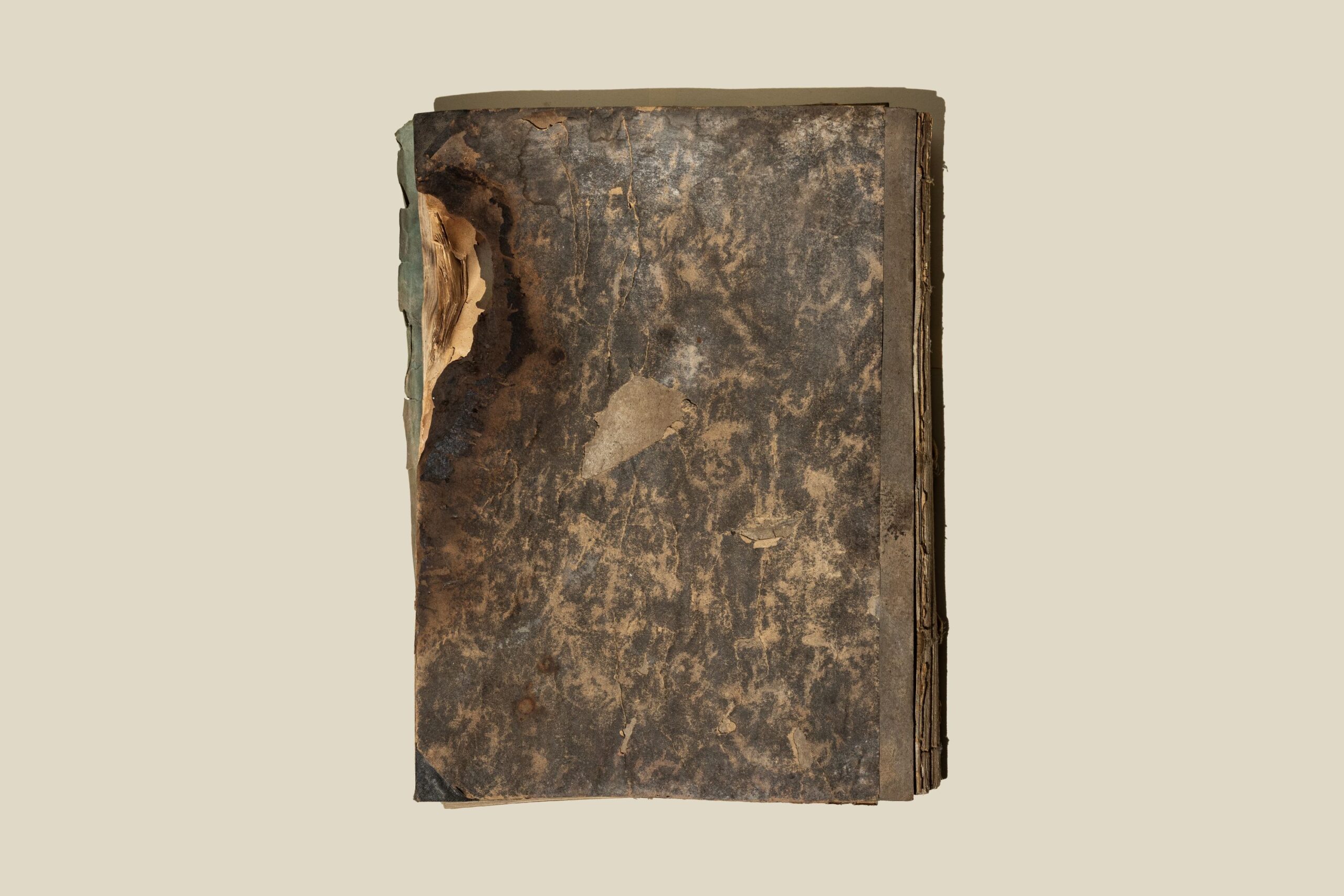
A gyűjteményekben kézikönyvtárak is találhatók, ahol az adott állatcsoporttal kapcsolatos szakirodalmi műveket őrzik. Lelőhelyei a kis példányszámban megjelentetett monográfiáknak, drága határozókönyveknek és különlenyomatoknak, melyek közül számos csak itt található meg Magyarországon. A Madárgyűjtemény szakkönyvtára úgyszólván teljesen megsemmisült, de néhány kötet fennmaradt, súlyosan megrongálódva (a bal oldali könyv). A Lepkegyűjtemény szakkönyvtára nem pusztult el, de a tűzoltás során a könyvállomány jelentős része megázott. Emiatt sok értékes könyvet újra kellett köttetni, de a víz nyomait nem lehetett eltüntetni.
The collections also house reference libraries containing specialized literature relevant to the specific animal group in question. These collections hold monographs published in limited print runs, expensive identification guides, and offprints – including works that, within Hungary, can often be found only here. The specialized library of the Bird Collection was almost completely destroyed, though a few volumes survived in a severely damaged state (the book on the left). The library of the Lepidoptera Collection was not destroyed, but a significant portion of the books suffered water damage during firefighting efforts. Consequently, many valuable books had to be rebound, yet the traces of water damage could not be fully removed.
3.
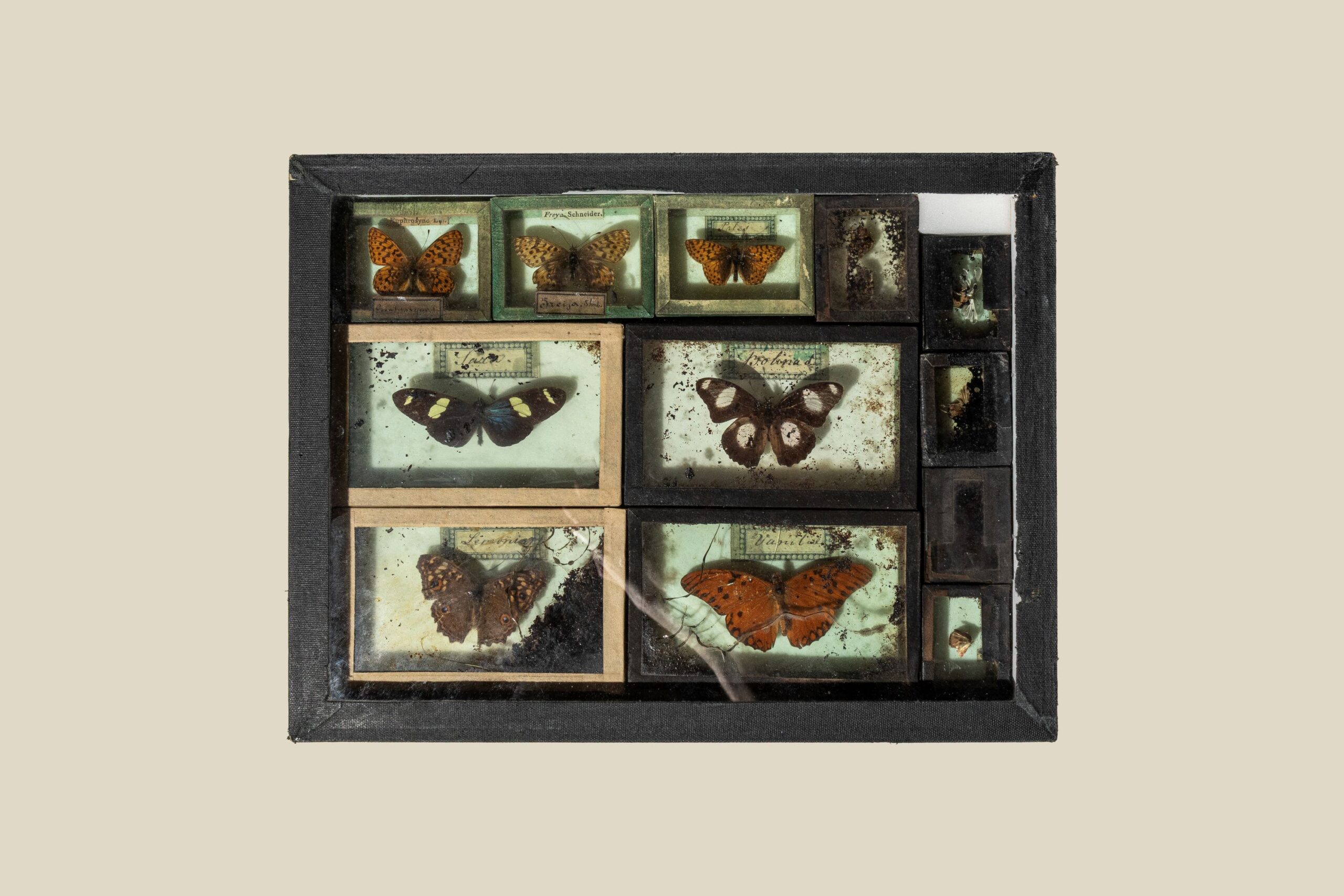
Koy Tóbiás (1757–1809) a Magyar Királyi Kamara pénztárnoka volt Budán, szabadidejében rovarokat gyűjtött. Kipreparált lepkéit kis üvegskatulyákba helyezte és a tárolásukra készíttetett, díszesen intarziás szekrény fiókjaiban tárolta. A lepkeskatulyás szekrény 1909-ben került múzeumunkba. Az 1956-os állattári tűzvész elérte a Lepkegyűjteményt is. A tűzoltás után derült ki, hogy nemcsak a szekrény égett meg helyrehozhatatlanul, hanem a fiókokban tárolt üvegskatulyák nagy része is megsemmisült. Az egykor több ezer példányt számláló gyűjteményből végül a muzeológusok és preparátorok restaurálási munkájának köszönhetően 935 skatulya maradt fenn, ezek egy részén jó láthatók a tűzvész nyomai.
Tóbiás Koy (1757–1809) was a clerk at the Royal Hungarian Chamber in Buda who collected insects in his spare time. He placed his pinned butterflies and moths in small glass boxes and stored them in the drawers of a specially made, ornately inlaid cabinet. The cabinet containing the boxes arrived to our museum in 1909. The 1956 fire in the zoological department also affected the Lepidoptera collection. After the fire was extinguished, it became clear that not only had the cabinet been irreparably damaged, but a large portion of the glass boxes stored in the drawers had been destroyed. Ultimately, thanks to the restoration work of museum curators and managers, 935 individual boxes survived from a collection that once numbered in the thousands; traces of the fire are clearly visible on some of them.
4.
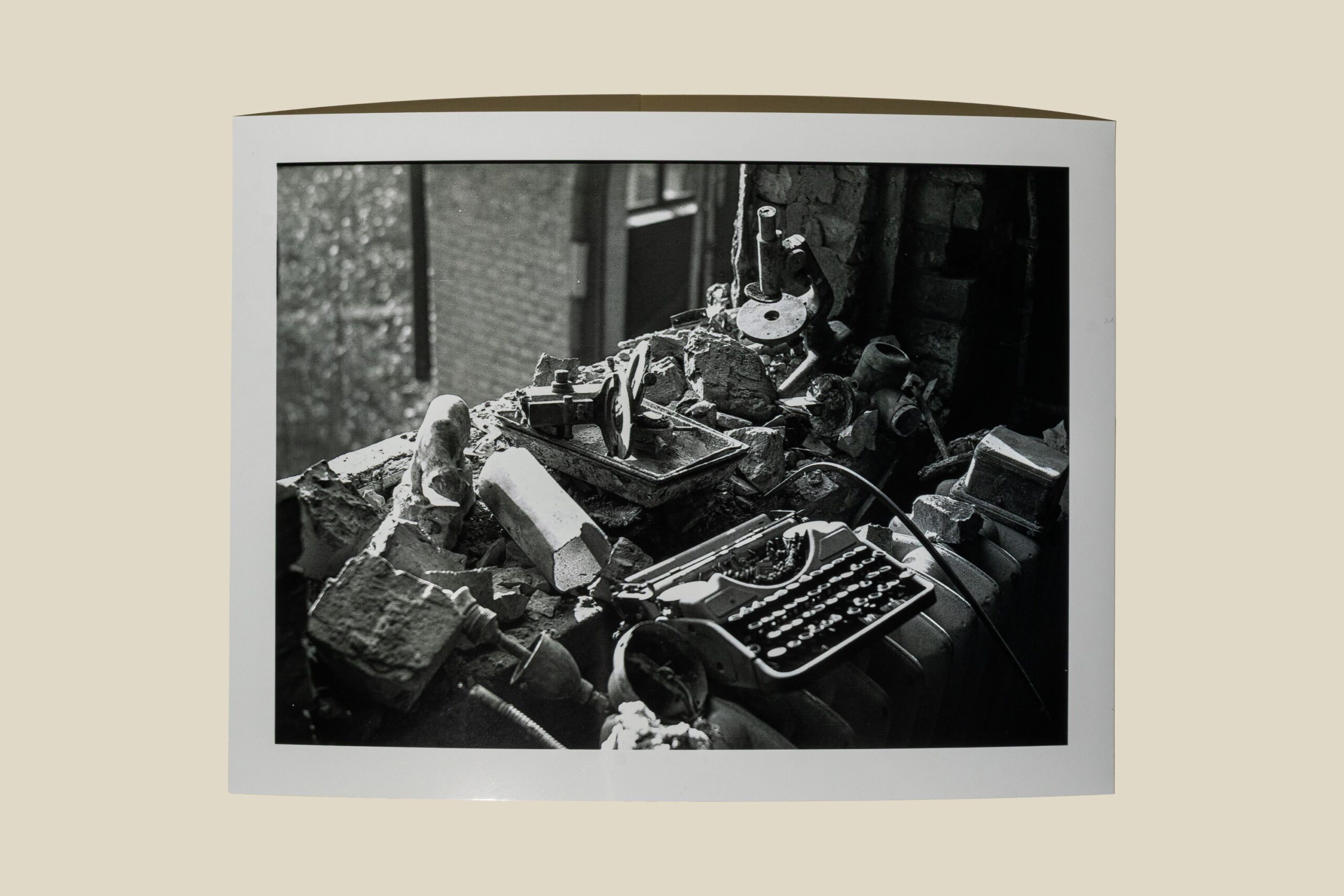
A kondenzor az átvilágítással dolgozó fénymikroszkópoknál használt lencserendszer, mely az alulról érkező fényt a vizsgált mintára összpontosítja, míg a tubus a mikroszkóp alsó tárgy- és felső szemlencséjét (objektív- és okulárlencse) összekapcsoló csőszerű alkotórész. Az 1956-os múzeumi tűzvészben megégett eszközök emlékeztetnek arra, hogy a gyűjtemények mellett a tudományos kutatáshoz szükséges felszerelések is jelentős károkat szenvedtek.
The condenser is a lens system used in transmitted-light microscopes, which focuses light coming from below onto the specimen under examination, whilst the tube is the tubular component connecting the microscope’s lower objective and upper eyepiece lens. The instruments destroyed in the 1956 museum fire serve as a reminder that, alongside the collections, the equipment necessary for scientific research also suffered significant damage.
.
5.
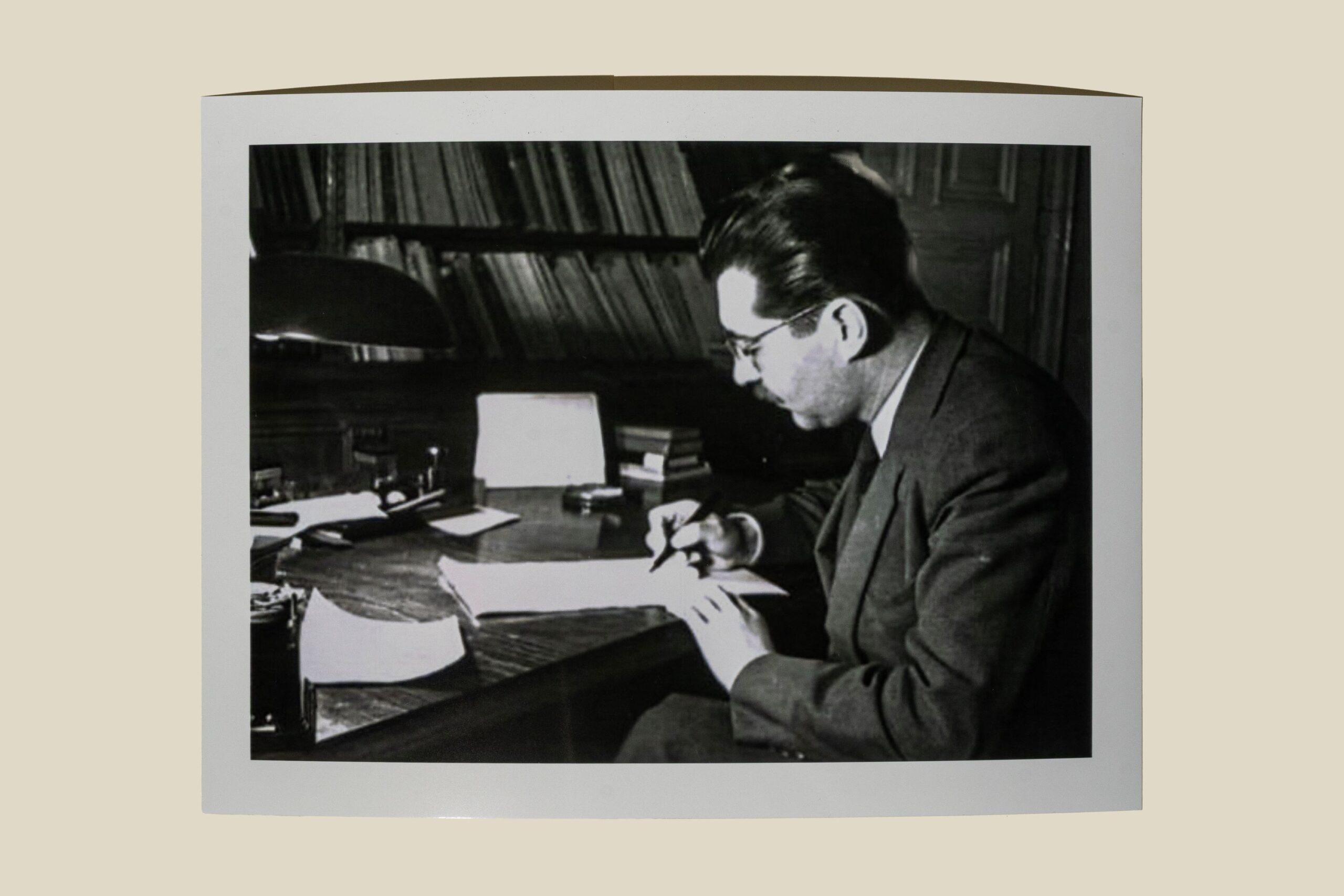
1956-ban épp kandidátusi disszertációján dolgozott Dely Olivér György, aki 1950 és 2003 között volt a Kétéltű- és Hüllőgyűjtemény vezetője. Alpesigőte-csontokon végzett környezettani és rendszertani vizsgálatokat – ehhez Berlinből 300, a Bukaresti Egyetemtől pedig 150 koponyát kölcsönzött. Sajnos a múzeum csontgyűjteménye mellett ezek is mind a Baross utcai épületben voltak a tűz napján, így Dely aktuális munkájával, tudományos dolgozatával együtt a lángtengerbe vesztek. Néhány megolvadt üvegfiola megmaradt mementóként, amelyekben az értékes csontok helyett ma már csak korom van. A disszertáció később elkészült, a gyűjtemény újjáépítése pedig Dely áldozatos munkájának köszönhető, aki a múzeumban töltött bő 50 éve alatt látta hamuvá válni, majd keze nyomán újjászületni a Kétéltű- és Hüllőgyűjteményt.
In 1956, Olivér György Dely, who served as the curator of the Herpetological Collection between 1950 and 2003, was working on his theses for the “Candidate of Science” degree. He was conducting ecological and taxonomic research on Alpine newt bones – borrowing 300 skulls from Berlin and 150 from the University of Bucharest for this purpose. Unfortunately, along with the museum’s own bone collection, these specimens were all in the Baross Street building on the day of the fire, meaning they perished in the sea of flames together with Dely’s ongoing work and scientific paper. A few melted glass vials have survived as mementos, now containing nothing but soot instead of the valuable bones. His dissertation was later completed, and the rebuilding of the collection is thanks to Dely’s dedicated work, who, during his more than 50 years spent at the museum, saw the Herpetological Collection turn to ashes and then be reborn through his own hands.
6.
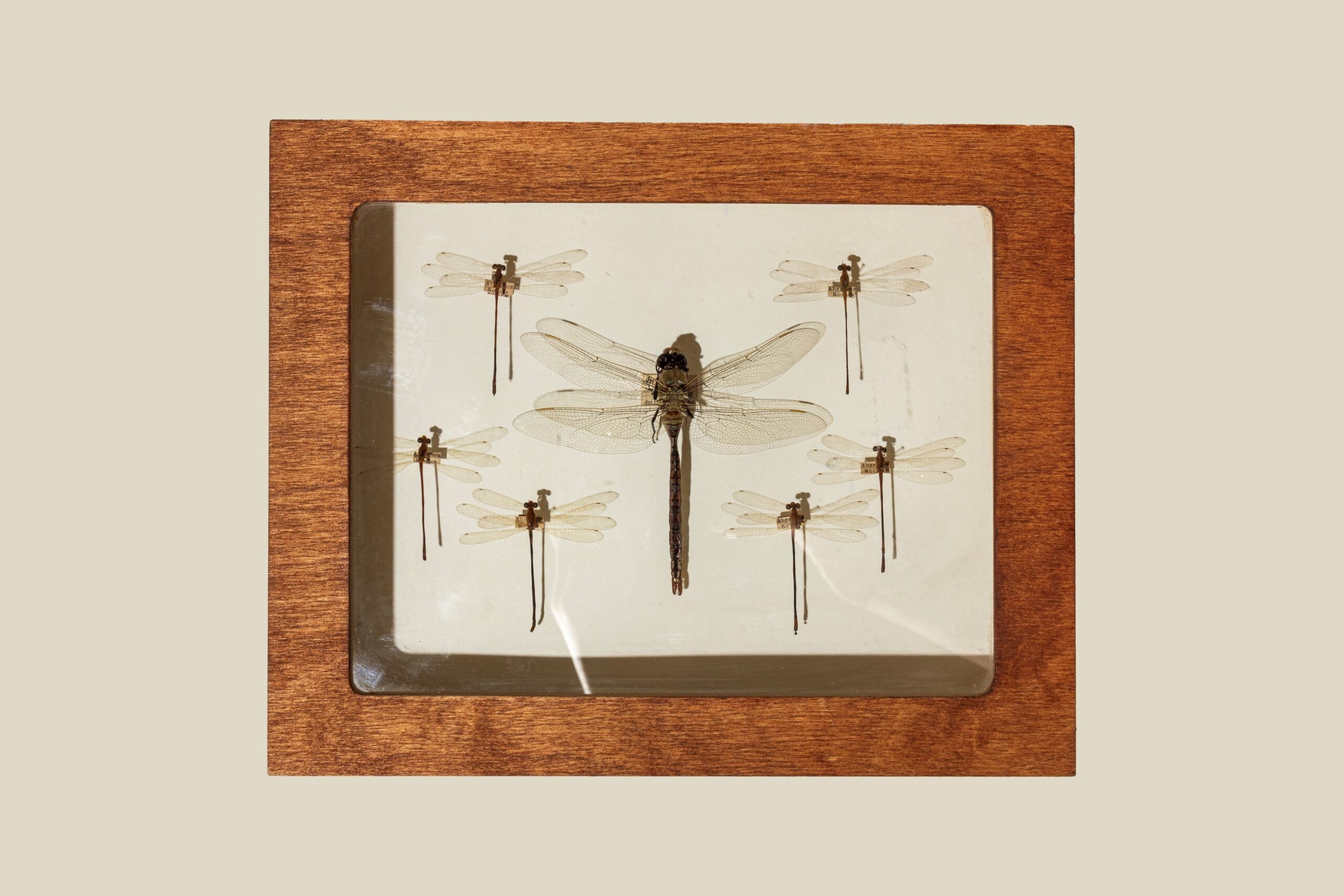
Az Állattárnak csaknem mindegyik gyűjteménye súlyos kárt szenvedett. Voltak, amelyek teljesen vagy szinte teljesen megsemmisültek – köztük a múzeum szitakötő-gyűjteményét őrző, akkori nevén Egyenesszárnyúak és recésszárnyúak gyűjteménye. A tűzvész során valamennyi, a gyűjteménybe tartozó rovarrend csaknem teljes anyaga elégett, a szakanyagnak csupán a töredéke maradt meg: a külföldi szitakötőanyag és további nagyjából 3000 meghatározatlan, hazai és külföldi egyenesszárnyú példány. Ezek mentsvára az épület földszintjén lévő Központi Könyvtár egyik szobája volt, mivel a tűz idején éppen itt voltak elhelyezve, így ezek túlélték a pusztítást.
Almost every collection in the Department of Zoology suffered severe damage. Some were completely or almost completely destroyed – including the collection housing the museum’s dragonfly material, known at that time as the Orthopteroidea-Neuropteroidea Collection. During the fire, almost the entire material of all insect orders belonging to the collection was burned, and only a piece of the specimens survived: the foreign dragonfly material and roughly 3,000 additional unidentified Hungarian and foreign specimens of Orthoptera. Their sanctuary was a room in the Central Library located on the ground floor of the building, where they happened to be stored at the time of the fire, thus surviving the conflagration.
7.
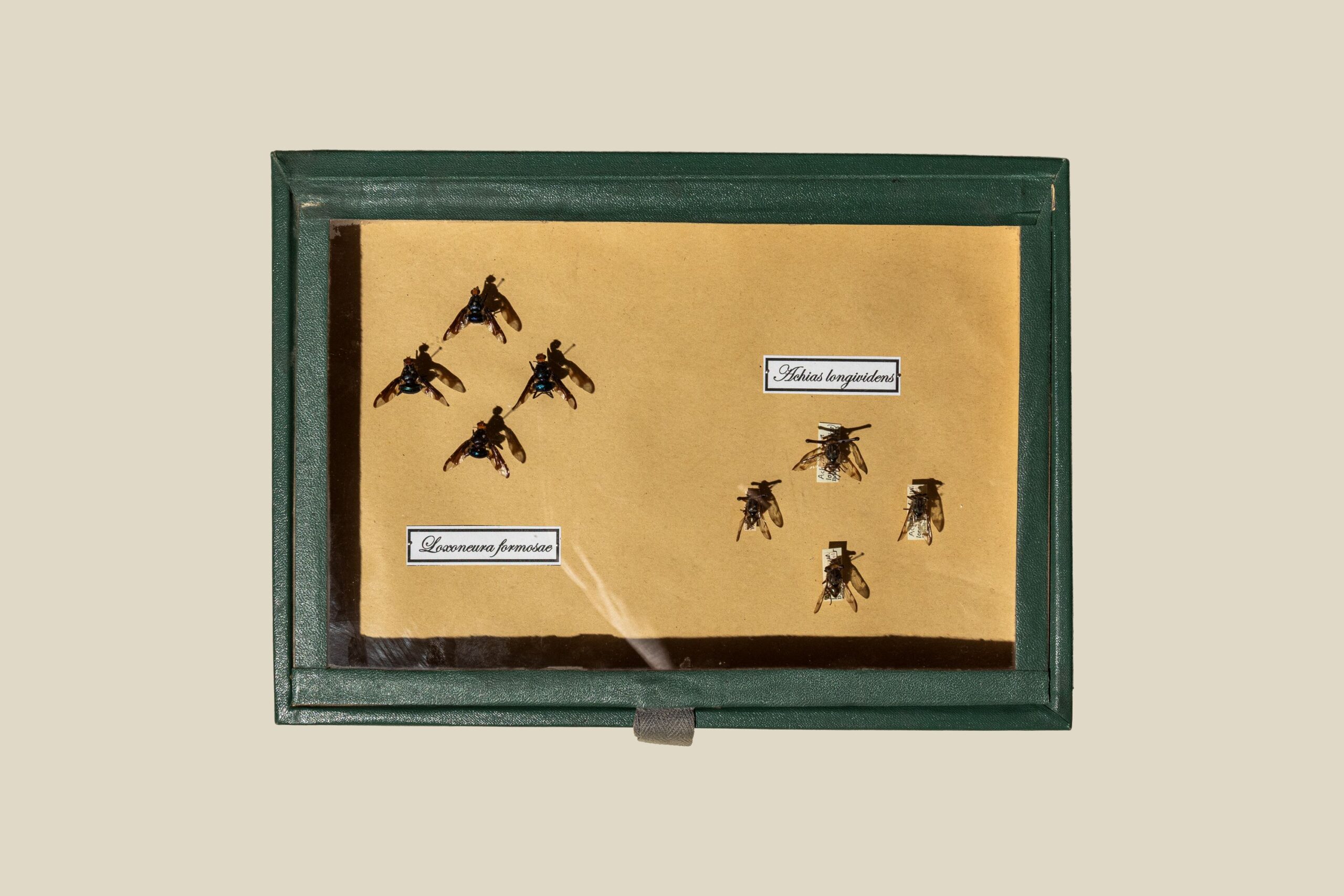
A múzeumnak a forradalom leverése során találatot kapott Baross utcai épületében a legfelső, harmadik emeleti szintről az égő alkohol lefolyt, és a második emelet is lángra lobbant, ahol a Kétszárnyúak gyűjteménye jelentős kárt szenvedett el: a mintegy kétszázötvenezer példányból mindössze ötvenezer maradt épen. Az elégett típuspéldányok száma meghaladja a háromezret. A szakkönyvtár is odaveszett, több mint hatezer könyv lett a tűz áldozata. A megmaradt példányok megmenekülése Soós Árpádnak, az akkori gyűjteményvezetőnek köszönhető, aki az általa tanulmányozott gyűjteményrészt ideiglenesen átvitte a szomszédos Szipókás rovarok gyűjteményébe, amit kevésbé károsított a katasztrófa.
During the suppression of the revolution, the museum’s building on Baross Street was hit; burning alcohol poured down from the top, third floor causing the second floor to catch fire as well, where the Diptera Collection suffered significant damage: out of approximately 250,000 specimens, only 50,000 survived. The number of destroyed type specimens exceeds 3,000. The collection’s library was also lost, with more than 6,000 books falling victim to the fire. The survival of the remaining specimens was thanks to Árpád Soós, the curator at that time, who had temporarily moved the part of the collection he was studying into the Hemiptera Collection, which was less damaged by the disaster.
8.
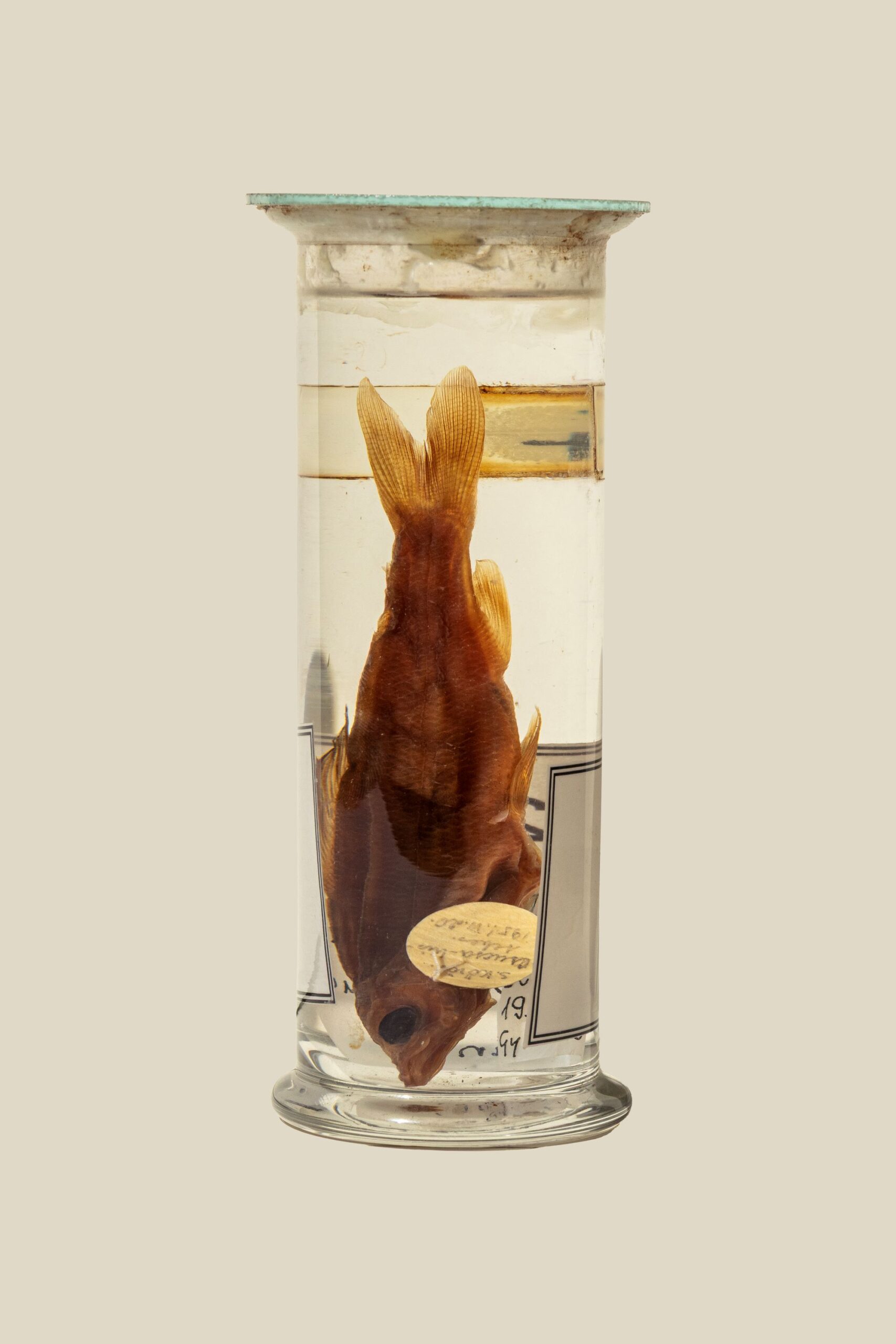
A bemutatott pénzes pér (Thymallus thymallus) a Halgyűjtemény történetének egyik ritkasága. A példány az 1956-os tűzvészt túlélő gyűjteményi anyag része, és egyben a pusztulás emlékét is őrzi. A tűz következtében több mint 14 000 példány semmisült meg a Halgyűjteményben. Ez az 1951-ben, a romániai Csucsán Gyurkó István által gyűjtött példány alkoholos preparátuma azonban eredeti gyűjtési adataival együtt fennmaradt. Meghatározását Berinkey László, a Halgyűjtemény akkori kurátora végezte, így a példány az ő gyűjteményi munkájának is fontos dokumentuma.
The European grayling (Thymallus thymallus) presented here is a rare survivor from the early history of the Fish Collection. It is part of the material that survived the 1956 fire and stands as a reminder of the collection’s devastating losses. More than 14,000 specimens were destroyed as a result of the conflagration. This alcohol-preserved specimen was collected by István Gyurkó in Ciucea, Romania, in 1951 and survived together with its original collection data. It was identified by László Berinkey, then curator of the Fish Collection, and remains an important record of his work on the collection.
9.
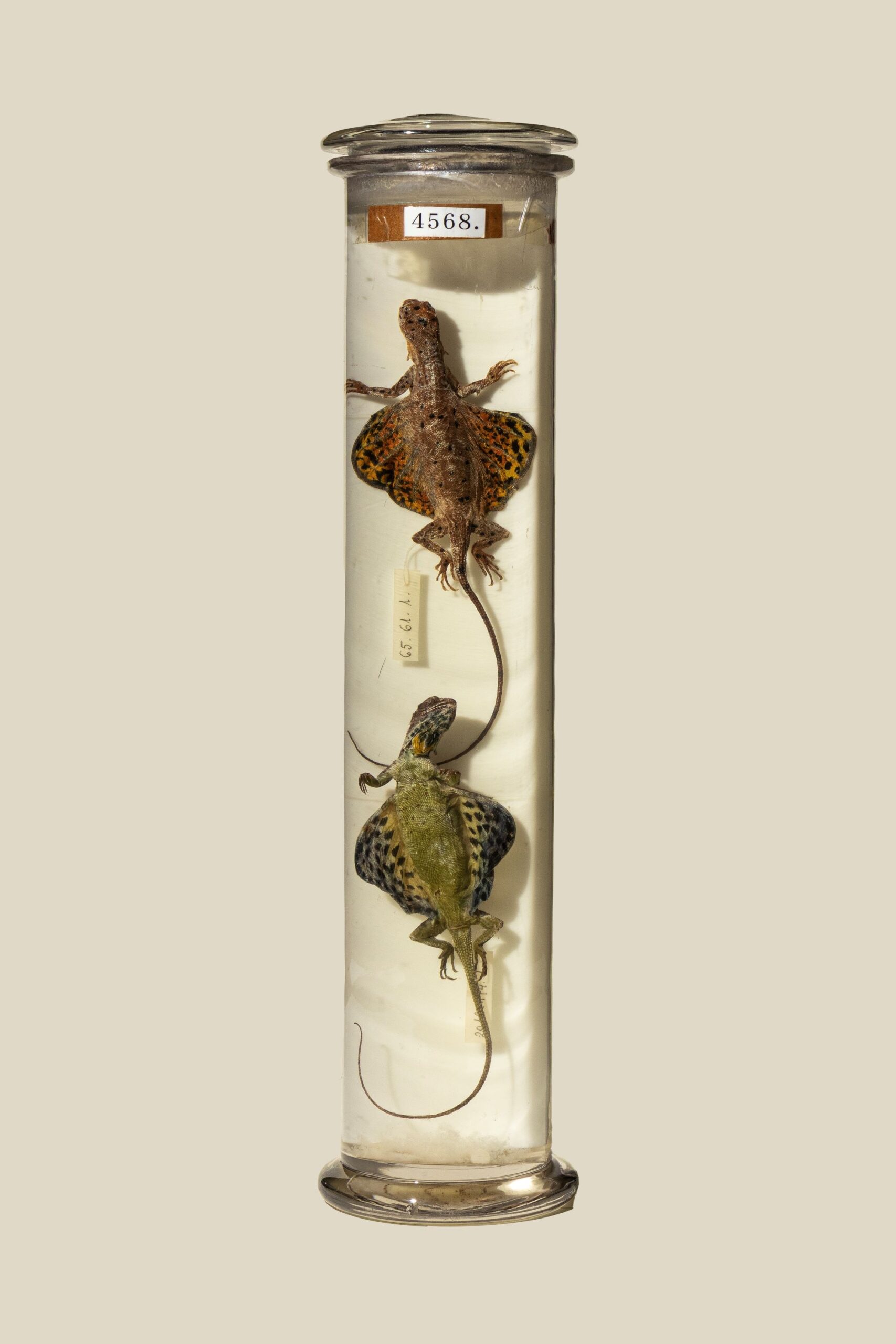
A 40 000 példányt számláló Kétéltű- és Hüllőgyűjtemény megsemmisült a Baross utcai tűzvészben. Néhány szerencsés példány azonban hírmondóként megmaradt a hajdani gyűjteményben őrzött gazdag faunából: a két repülőagáma (Draco volans) a kiállításokat felemésztő tüzek túlélője. Különösen értékes példányokról van szó, Xántus János (1825–1894) etnográfus és természetbúvár gyűjtötte őket 1870-ben, Vietnámban. Az itt bemutatott példányok az 1956-os tűz idején a Nemzeti Múzeum épületében, az Afrika-kiállítás szintjén voltak láthatóak, a magyar állattani kutatás és preparálás fejlődését bemutató tárlaton. A lángok az emelet e részét megkímélték, így szerencsére fennmaradt néhány példány, hogy emlékeztessenek minket az egykori gazdag gyűjteményre és a páratlan kiállításokra.
The Herpetological Collection, numbering 40,000 specimens, was destroyed in the Baross Street fire. However, a few fortunate specimens have survived as testament to the rich fauna once preserved in the collection: the two flying dragons (Draco volans) are survivors of the exhibition fires. These are particularly valuable specimens, collected by János Xántus (1825–1894) ethnographer and naturalist in 1870 in Vietnam. At the time of the 1956 fire, the specimens presented here were on display in an exhibition an exhibition showcasing the development of Hungarian zoological research, animal illustration and taxidermy, located on the same floor as the Africa exhibition in the building of the National Museum. The flames spared this part of the upper floor so fortunatelya few specimens survived to remind us of the once-rich collection and the unparalleled exhibitions.
10–11.
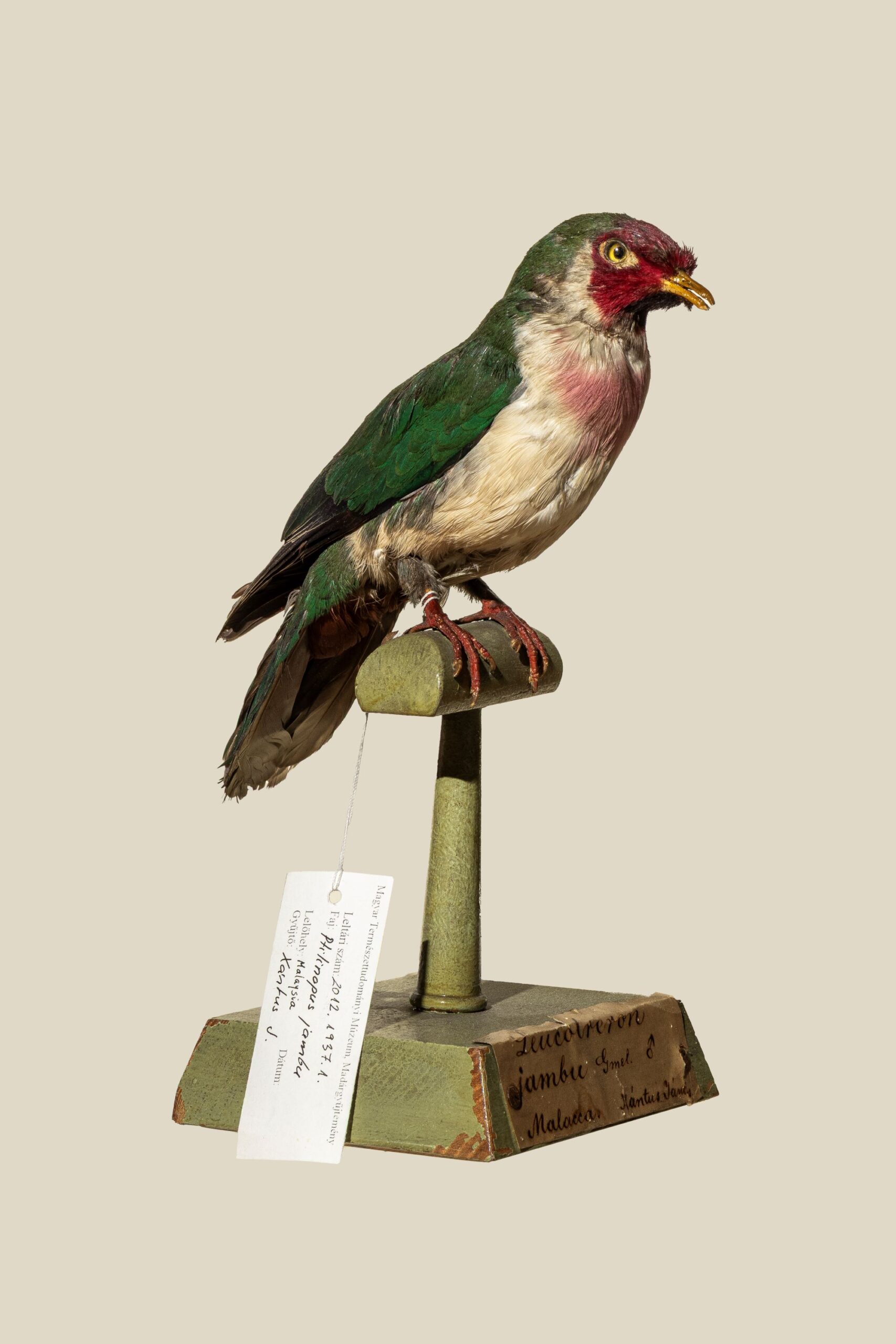
A Madárgyűjtemény szinte teljesen megsemmisült 1956-ban. A leégett Afrika-kiállításban, majd a Baross utcai tűzvészben közel 36 ezer madárpreparátum és 22 ezer tojás vált a lángok martalékává. Alig kéttucatnyi példányt ismerünk, amely fennmaradt; közülük való ez a két látványos madár. A Livingstone-turákó Délkelet-Afrikában honos faj, amelyet Charles Livingstone-ról, a híres felfedező fivéréről neveztek el. Ezt a példányt Kubinyi Ágoston múzeumigazgató vásárolta meg 1857-ben a múzeum részére. A színpompás jambu gyümölcsgalambot Xántus János gyűjtötte 1869-ben, kelet-ázsiai útja során a Maláj-félszigeten.
The Bird Collection was almost completely destroyed in 1956. In the fires at the Africa exhibition and then at the collection in Baross Street, nearly 36,000 birds and 22,000 eggs were lost. Barely two dozen specimens are known to have survived; these two spectacular birds are among them. Livingstone's turaco, native to southeastern Africa, is named after Charles Livingstone, brother of explorer David Livingstone. Museum director Ágoston Kubinyi purchased this specimen in 1857. The colourful Jambu fruit dove was collected by János Xántus on the Malay Peninsula in 1869, during his Southeast Asian journey.
